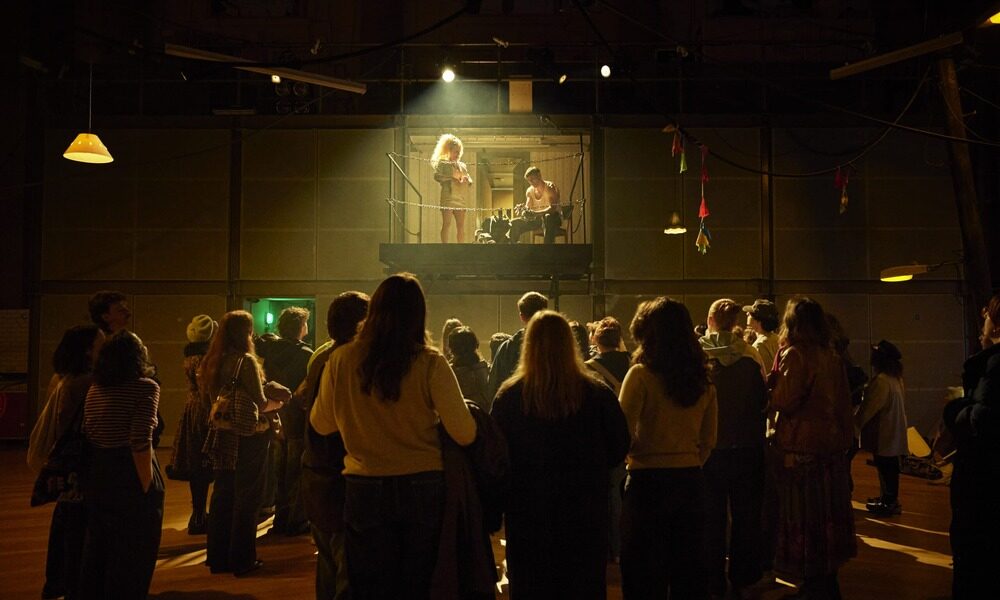
There is something undeniably powerful about watching Even These Things inside the Royal Exchange Theatre. Not just because it is a play about Manchester. Not just because it arrives as part of the theatre’s 50th anniversary season. But because, at the heart of it, sits the 1996 IRA bomb that tore through the city centre and was a stone’s throw away from the very building in which we are watching the story unfold.
That sort of theatrical proximity does a lot of heavy lifting before anyone has even opened their mouth. The walls remember. The city remembers. Or at least, the play keeps circling around memory: who carries it, who inherits it, and who still feels it long after the city has moved on.
Written by Rory Mullarkey and directed by James Macdonald, Even These Things is billed as an epic story of Manchester and Ireland across three centuries. That is the promise. And when Even These Things is good, it is very good indeed. It is ambitious, beautifully performed and often genuinely moving. But it is also a play whose individual parts are stronger than the whole. It offers three compelling dramatic fragments, but the thread binding them together can feel thin, even slightly frayed, like someone has tried to stitch together a family tapestry using a piece of string found at the bottom of a drawer.
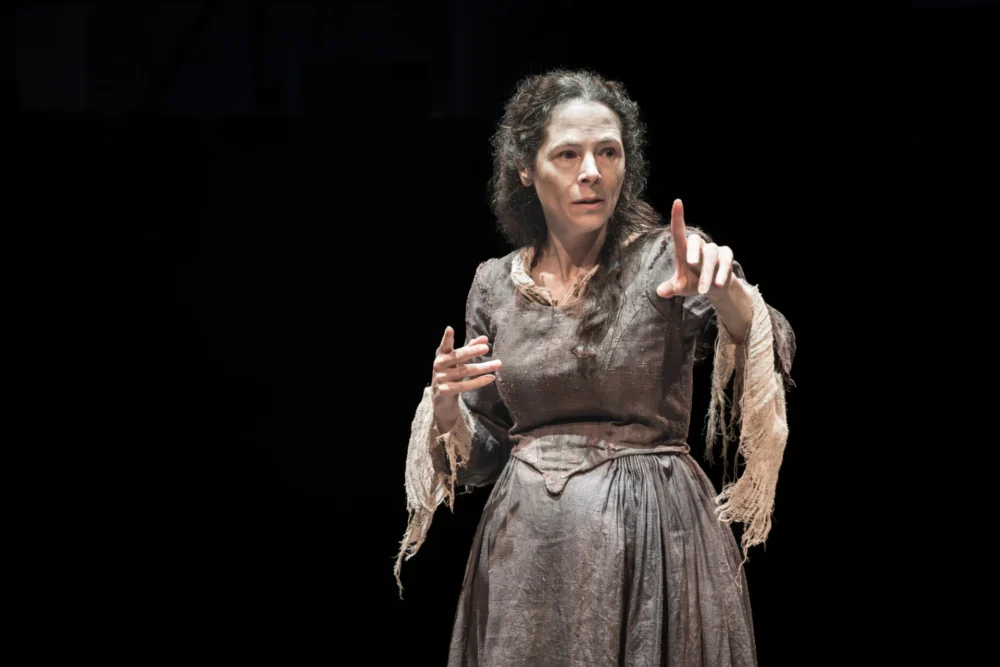
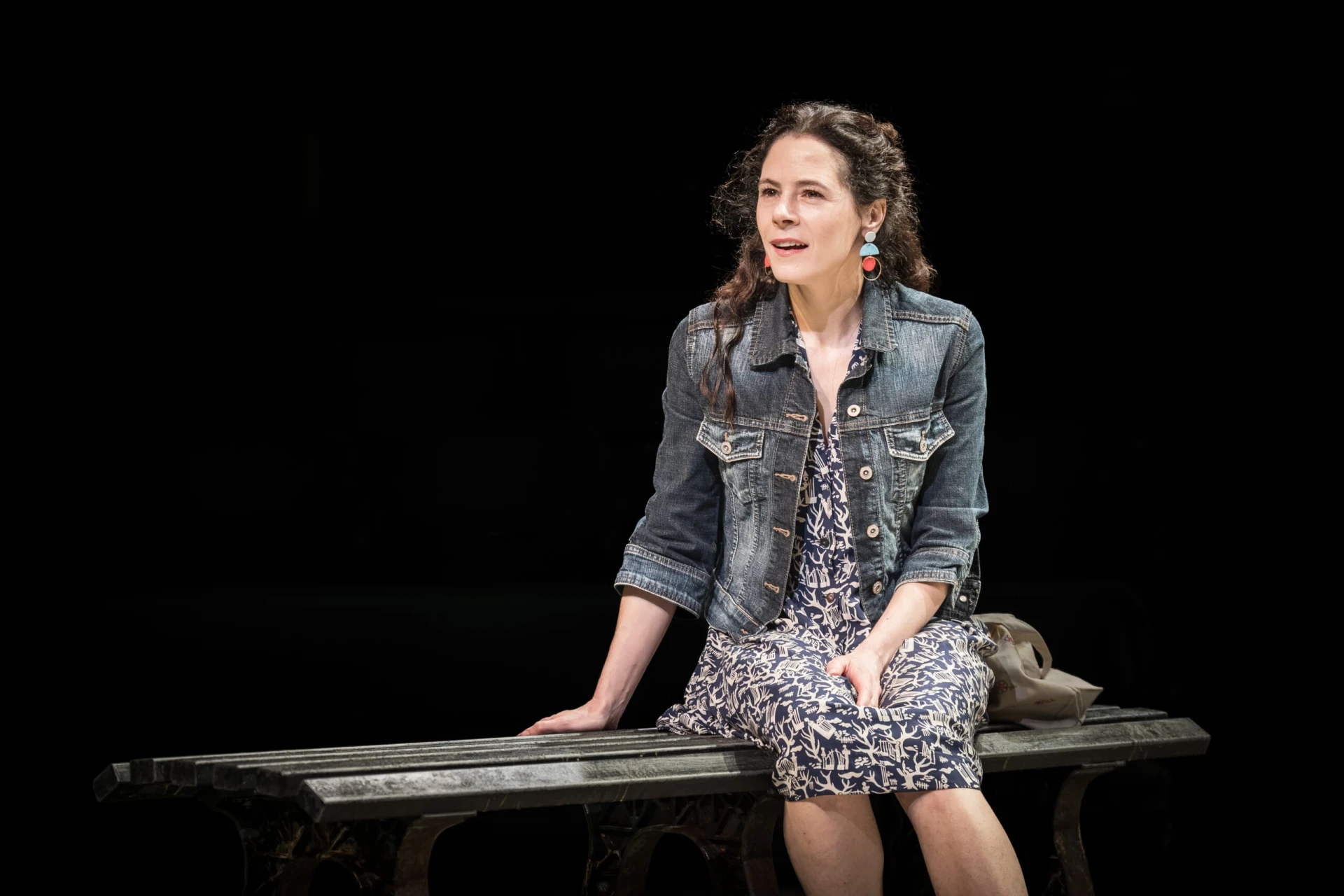
The first section, set in 1846, is the strongest piece of pure theatre in the production. Elaine Cassidy delivers a remarkable monologue as Annie Donovan, an Irish woman living in brutal poverty. She is pregnant, furious, grieving, funny, and alive in every sense. The premise — a woman out to avenge the killing of her beloved pig — could easily tip into grotesque gothic folk tale, but Cassidy grounds it in something raw and painfully real.
There is very little on stage: a performer, a costume, some sharply judged lighting, and the infamous intimacy of the Royal Exchange’s in-the-round space. That is all. No clutter. No theatrical faff. Just a woman telling us a story with enough force to make the room lean towards her, dragging the audience almost through the very mud and hunger of 19th-century Manchester with her. It is, in many ways, a brilliant standalone piece.
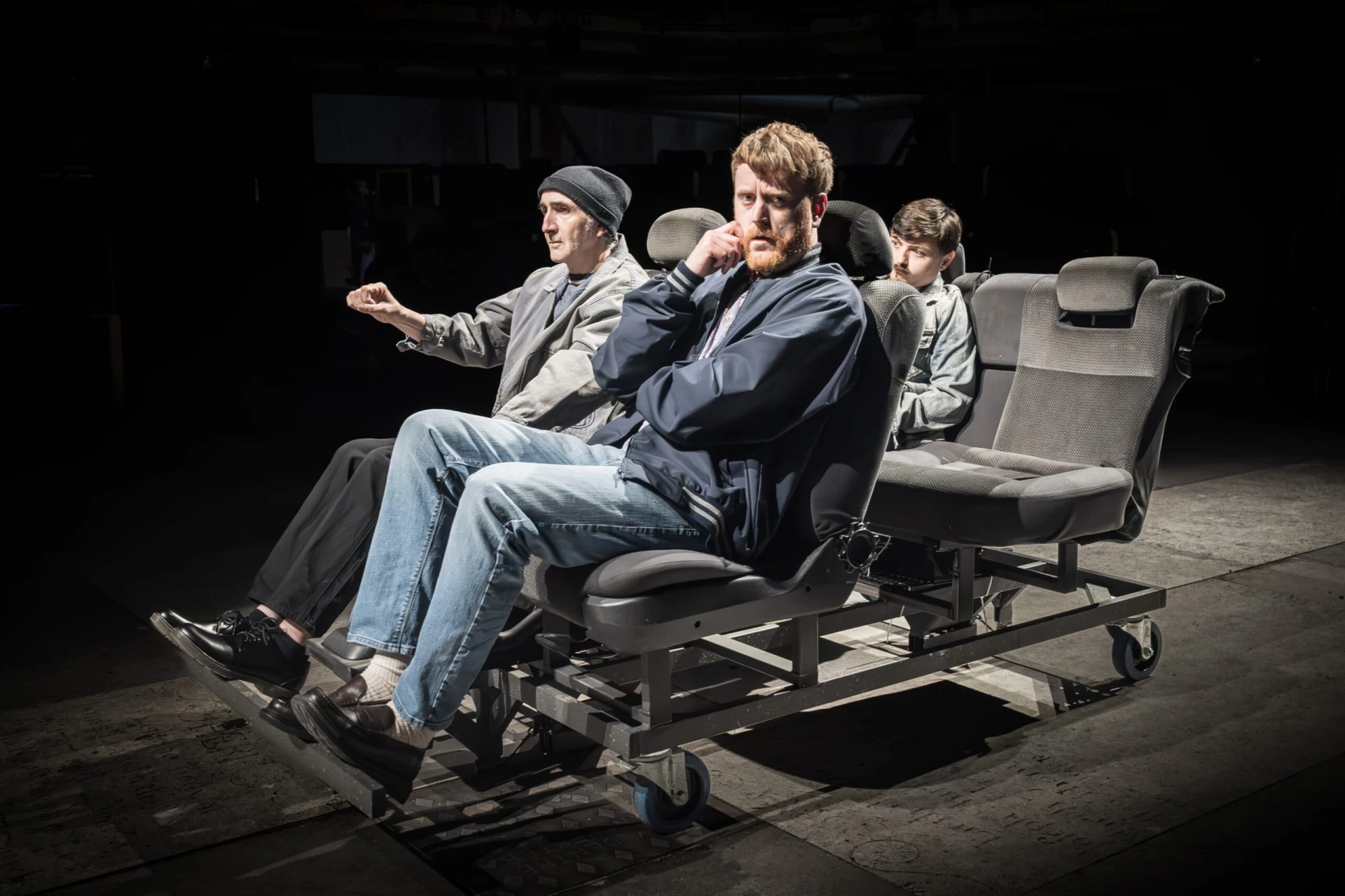
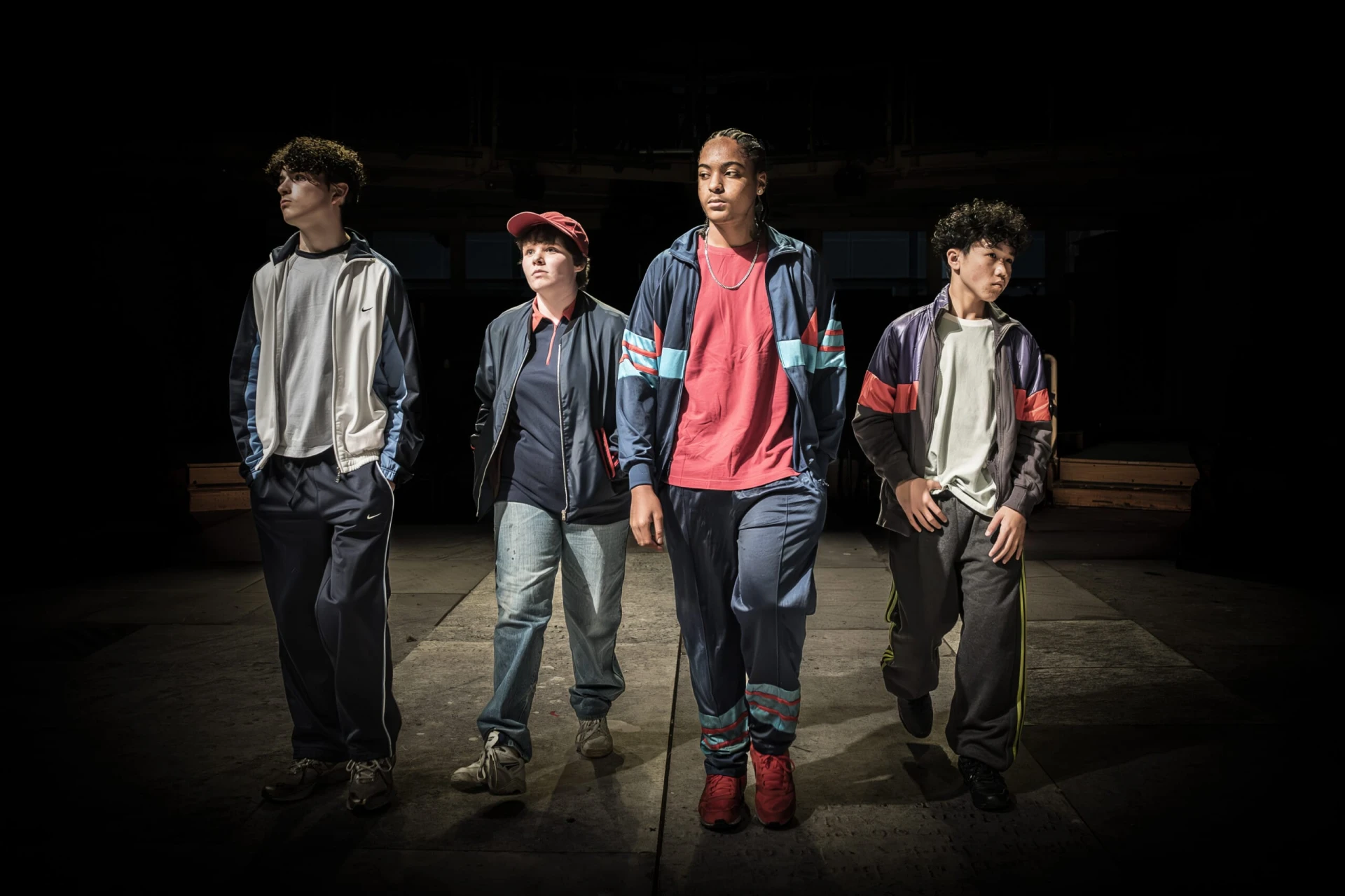
And perhaps that is part of the problem. It works so well on its own that you begin to wonder what exactly it is setting up beyond the broad fact of Irish migration, The second section moves us to 1996, and here the production finds its most emotionally immediate connection to the city. We are taken through Manchester on the morning of the bombing: shoppers, teenagers, workers, children, wanderers, hangovers, errands, noise, movement, routine. The ordinary Saturdayness of it all. And it hits home.
This is where the production is ingenious in its use of the Manchester community cast, bringing the city to life through the very people it depicts, going somewhere, buying something, wasting time, being young, being bored, being busy, being Manchester.
The production pulls you into that humdrum so effectively that when the bomb finally hits, it genuinely jolts. The sound and lighting do exactly what they need to do: not simply to impress, but to rupture. For a moment, the theatre becomes less a venue than a memory chamber.
Yet even here, there are questions. The vignettes are affectionate and often beautifully handled, but they also risk becoming a parade of “ordinary people doing ordinary things” until the point has been well and truly underlined.
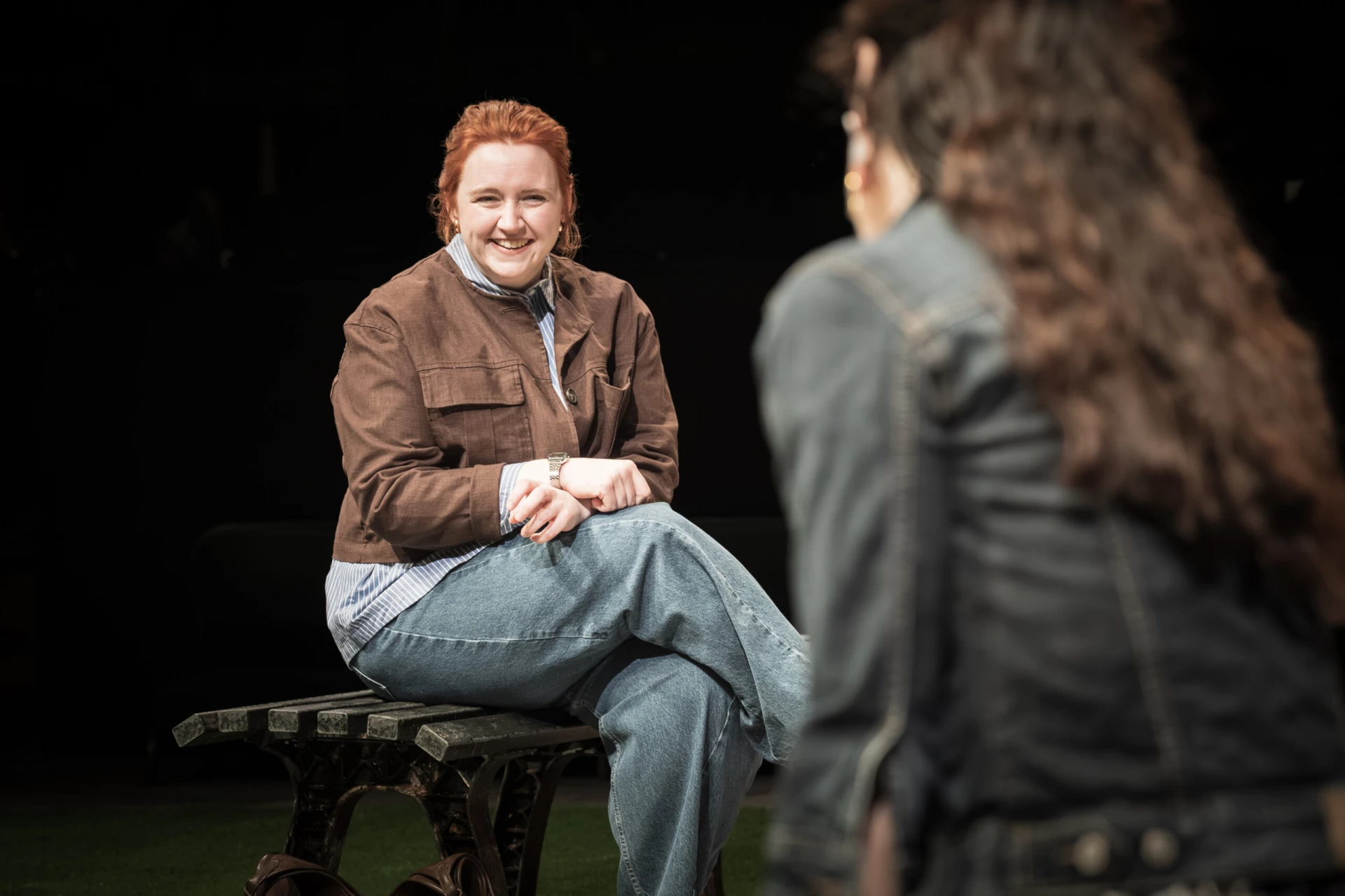
The third section brings us into the present day. Jenny has returned to Manchester and meets Kaz, an Irish woman and single mother. Jenny is grieving after a miscarriage. She is angry.
But this is also where Even These Things begins to unravel. Jenny’s anger is understandable in human terms, but dramatically it is harder to locate. Is she angry about the miscarriage? About Manchester? About being back? About the legacy of the 1996 bomb? About Irishness? The answer may be “all of the above”, but the play does not quite make that complexity land.
The recurring motif of pregnancy and lost children also feels rather heavy-handed. It seems intended to suggest something larger about birth, loss and survival, yet never develops much beyond the fact that all three stories involve pregnancy. Rather than binding the acts together, it feels like a loose stitch between them — visible, deliberate, but not strong enough to hold the whole piece together.
And this gets to the larger issue. If Even These Things is meant to be an epic story of Manchester and Ireland, then it cannot simply move from Irish poverty in the 1840s, to the IRA bomb in 1996, to a present-day encounter with someone Irish and assume the bridge has been built. There are 150 years of Irish-Mancunian history sitting between those moments: communities formed, challenged, absorbed, stereotyped, celebrated and forgotten. By leaving so much of that history untouched, the play short-changes the very epic it is trying to tell.
The production’s craft is beyond doubt. James Macdonald directs with clarity, Laura Hopkins’ design gives people and movement room to carry the drama, and Ian Dickinson’s sound with Charles Balfour’s lighting make the 1996 sequence land with real force. Elaine Cassidy is magnetic in the opening monologue, Katherine Pearce brings warmth and emotional precision, and the community cast gives the play a genuinely civic scale that feels meaningful rather than tokenistic.
And maybe that is where Even These Things works best: not as a perfectly unified epic, but as a collection of theatrical acts of remembrance.
Verdict: An ambitious, beautifully staged act of remembrance, powered by superb performances and a striking recreation of Manchester on the morning of the 1996 bombing. Even These Things moves us in places and startles us in others, but its three stories never quite connect into the fully convincing epic of Manchester and Ireland it sets out to become. 
What: Even These Things
Where: Royal Exchange Theatre
When: 29th May 2026